
- Residential Energy Storage Program Products
- Energy storage systems - ESS
- Batteries
- Battery chargers
- Power supplies
- Uninterruptible power supplies - UPS
- Inverters
- DC-DC converters
- Network devices
- Line filters
- Solar systems
- Building automation
- Automotive energy
- Test & measurement
- Protection devices
- Transformers
- DC Power Systems
- Lighting technology
- Solar carports
- EMS controllers
- EV car chargers
- Energy metering
- Power generators
Laboratory power supplies
Laboratory Power Supplies – precision AC, DC and bidirectional sources
Laboratory power supplies are fundamental instruments in test & measurement, R&D and production testing environments. Their applications range from prototype development and component characterization to end-of-line testing and materials research. Energom’s catalog includes over 2,300 models from leading manufacturers — TDK-Lambda, iTECH and other established industrial brands.
DC laboratory power supplies
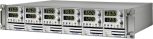
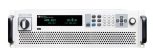
DC laboratory power supplies deliver stable, adjustable DC output voltage and current with low noise and high regulation accuracy. The range extends from compact bench-top units of a few watts to multi-kilowatt programmable models for industrial applications. Current-generation models feature digital displays, remote control interfaces (RS-232, RS-485, USB, LAN, GPIB) and series/parallel operation capability for extended voltage or current range.
AC laboratory power sources
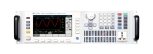
AC laboratory power supplies (AC power sources) provide regulated AC output with adjustable frequency and minimal distortion. Their primary application is testing electrical equipment under simulated mains conditions: frequency variation, voltage fluctuation and harmonic distortion analysis. They are particularly important in EMC laboratories and standards compliance testing.
Bidirectional (two-quadrant) DC power supplies
Bidirectional laboratory power supplies can both source and sink current, with fast transitions between the two modes. This makes them essential for battery charge/discharge cycle testing, regenerative braking simulation and other dynamic load profiling tasks. The source-to-sink transition occurs on a millisecond timescale, without output voltage or current overshoot.
Selecting the right laboratory power supply
Key technical parameters to consider when specifying a laboratory power supply:
- Power rating: product of the maximum required output voltage and current
- Regulation accuracy: output voltage and current resolution, line/load regulation
- Noise level (ripple & noise): critical for sensitive circuit testing
- Programmability: remote control interfaces, SCPI compatibility
- Dynamic response: transient recovery time under rapid load changes
- Protection features: OVP, OCP, OTP and OPP protection
Our manufacturers
Our laboratory power supply range is built primarily around TDK-Lambda and iTECH. Both are globally recognized leaders in power electronics: TDK-Lambda for high-precision programmable units, iTECH for versatile, fully programmable laboratory solutions across a wide power range. For other types of industrial power supplies, our catalog covers those as well.
For technical inquiries or project-specific requirements, our engineering team is available to assist.
Frequently asked questions about laboratory power supplies
What is the difference between a laboratory power supply and an industrial power supply?
A laboratory power supply offers adjustable output voltage and current with a digital display, fine resolution controls and typically includes programmable interfaces for automated testing. An industrial power supply provides a fixed or narrowly adjustable output, optimized for reliability, long service life and cost-efficiency. Laboratory power supplies are used in development, testing and research; industrial power supplies are designed for integration into equipment and continuous operation.
When do I need a programmable laboratory power supply?
A programmable unit is required when the application involves automated test sequences, repeatable measurement cycles or remote control. Typical use cases include end-of-line testing (EOL), battery charge profile simulation, environmental stress screening and automated quality control. Programmable models support SCPI commands via RS-232, USB, Ethernet or GPIB interfaces.
What does “two-quadrant” or “bidirectional” operation mean?
Two-quadrant (bidirectional) operation means the power supply can both deliver current (source mode) and absorb current (sink mode). This enables simulation of battery charge/discharge cycles, regenerative braking testing and other dynamic load profiles. The transition between source and sink mode occurs in the millisecond range, without voltage or current overshoot at the output.
What communication interfaces are available?
Programmable laboratory power supplies typically offer the following interfaces: RS-232 (legacy serial), USB (most common for bench-top control), RS-485 (industrial, daisy-chainable), Ethernet/LAN (networked remote control) and GPIB/IEEE-488 (the standard for laboratory automation). Most models are SCPI-compatible, providing a unified command language for automated control.
How do I choose the right power rating for a laboratory power supply?
The required power rating equals the maximum output voltage multiplied by the maximum output current. It is advisable to specify at least 20% headroom above peak demand, as operating a power supply near its rated maximum reduces regulation accuracy and service life. Additionally, consider the output configuration (single-channel or multi-channel), resolution, noise floor and any series/parallel stacking requirements.
For technical support, contact our engineering team.